Poetry in the Psalms

When I think of poetry, I think back to the poems I would have read as a child.   Often in them, the imagery helped me to visualize the scene and the rhyme made it easy to remember.

Rain Poem

The rain was like a little mouse

quiet, small and gray.

It pattered all around the house

 and then it went away.

by Elizabeth Coatsworth

In Hebrew poetry, the imagery again help us to visualize the scene, but it does not uses rhyming words.  Instead it uses “thought rhymes” or parallelism.  This is when two or more lines are coupled to form the complete thought.  Unlike poetry that relies on rhyme, parallelism can be translated into other languages without losing its poetic nature.

Three types of parallelism are

     Synonymous-The second line repeats the first line in different words.

     Antithetic-The second line contrasts with the first line.

     Synthetic-The second line explains and expands the first line.

Now, look back at Psalm 1.  What types of parallelism to you see?

Verse 1 could be synonymous or synthetic depending on where the break for line one is.  Verse 2 is easier, it  would be synonymous

It is important as we study the psalm to remember many use imagery, such as similes and metaphors.  Psalms are often lyrical poetry and not meant to be taken as literal statements. Psalm 1:3 would be an example of this.

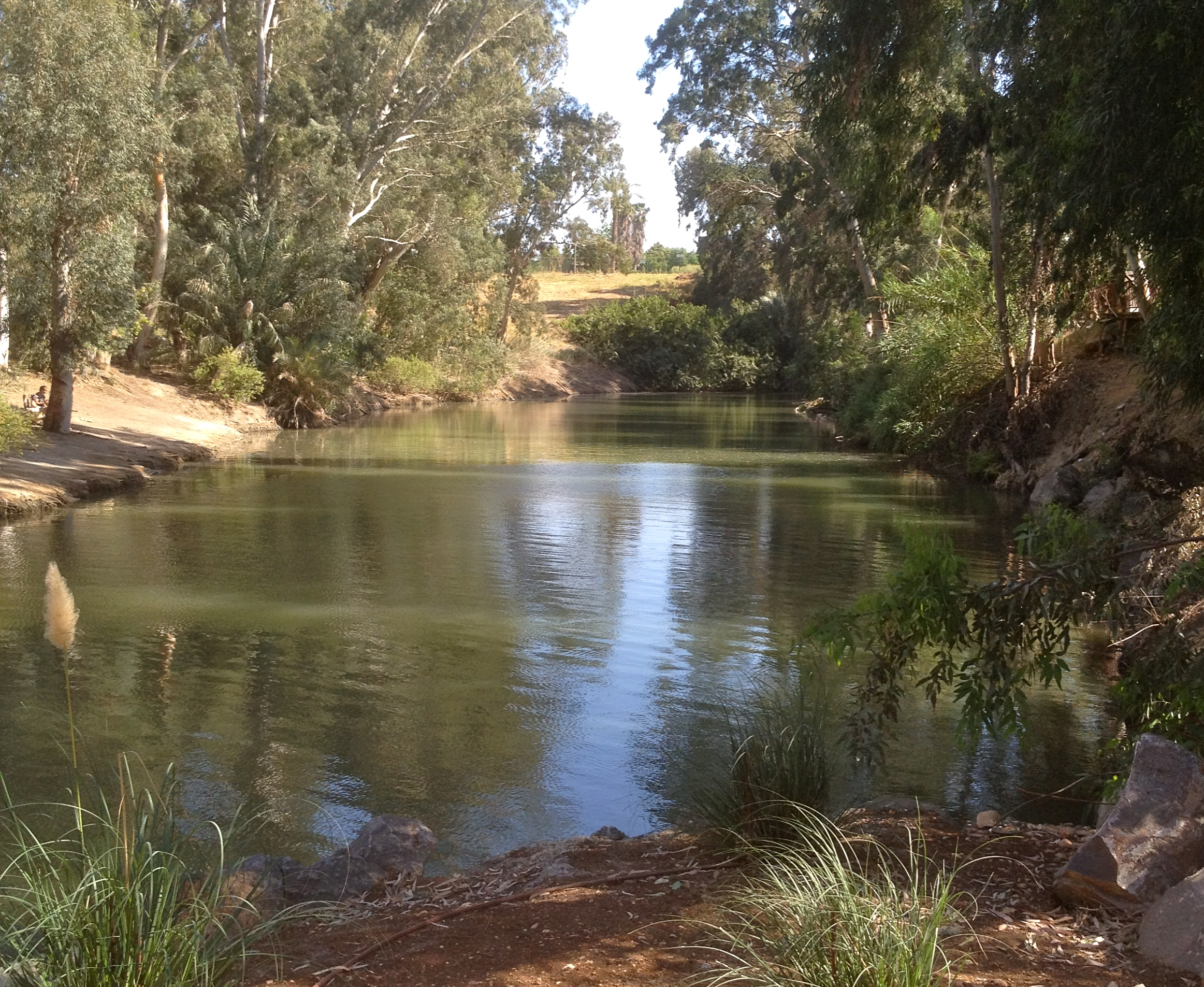
3  He will be like a tree firmly planted by streams of water,

   Which yields its fruit in its season

   And its leaf does not wither;

   And in whatever he does he prospers

The imagery here helps us to understand the result of delighting in the law of the Lord and helps to see the contrasts in verses 4-6 of the outcome of the wicked.

The Lord Knows

So are you ready to open up your bible and start studying the psalms with me this summer?

Why not start with Psalm 1?  Read through it several times until you are familiar with the words and the ideas the psalmist is presenting.  You may want to read it aloud or sing it (hearing the words aloud helps me, singing it can be fun 🙂 )

1 How blessed is the man who does not walk in the counsel of the wicked,

    Nor stand in the path of sinners,

    Nor sit in the seat of scoffers!

2  But his delight is in the law of the Lord,IMG_1347

   And in His law he meditates day and night.

3  He will be like a tree firmly planted by streams of water,

   Which yields its fruit in its season

   And its leaf does not wither;

   And in whatever he does he prospers.

4  The wicked are not so,

    But they are like chaff which the wind drives away.

5  Therefore the wicked will not stand in the judgment,

    Nor sinners in the assembly of the righteous.

6  For the Lord know the way of the righteous,

   But the way of the wicked will perish.


Spend some time thinking about what you have read.

What picture does the psalmist present of the righteous…the wicked?

Now think  about your life…

Who do you spend time with?

Where do you find your delight?

Do you think the Lord would consider your righteous or wicked?

Two important tips to remember when interpreting Hebrew poetry:

  1. It uses figurative language-similes, metaphors, hyperboles and is not written to be understood literally.
  2. It uses thought rhymes (parallelism) instead of word rhymes.  We will learn more about this as we move through the summer.